
The Design of Skyward Dream
Solo-developed first-person narrative platformer game built in 9 months.

Skyward Dream: A Design Deep Dive
Origin: A Jam, A Constraint, A Game
It started with a challenge I set for myself.
I entered 7DFPS 2023, a game jam on itch.io dedicated to first-person games built in seven days. Reading the brief carefully, I noticed something: the rules defined eligibility by perspective, not by genre. Any first-person game was valid. That small gap opened a large question: what happens if you make an FPS without the shooting?
I decided to find out.
Instead of defaulting to combat, I turned my attention to the mechanics that FPS games typically treat as secondary, the traversal layer. Movement. Momentum. The relationship between a player's body and a three-dimensional space. What if that was the whole game?
The concept crystalized quickly: a first-person 3D platformer, closer in spirit to a parkour game than a shooter. But I wanted more than a sequence of movement challenges. I wanted narrative. I wanted the world to mean something. So I pushed the concept further: a first-person narrative adventure parkour game set inside the subconscious mind.
That premise became both the game's identity and its most demanding design problem. Designing environments that feel like the inside of a mind requires a precise balance of the ordinary and the surreal. Too mundane and the dream logic disappears. Too abstract and the player loses their anchor. Finding and holding that line became the central aesthetic challenge of the entire project.
The game jam prototype became the foundation. Nine months later, it became Skyward Dream.

The first trailer showing the early vertical slice of the game
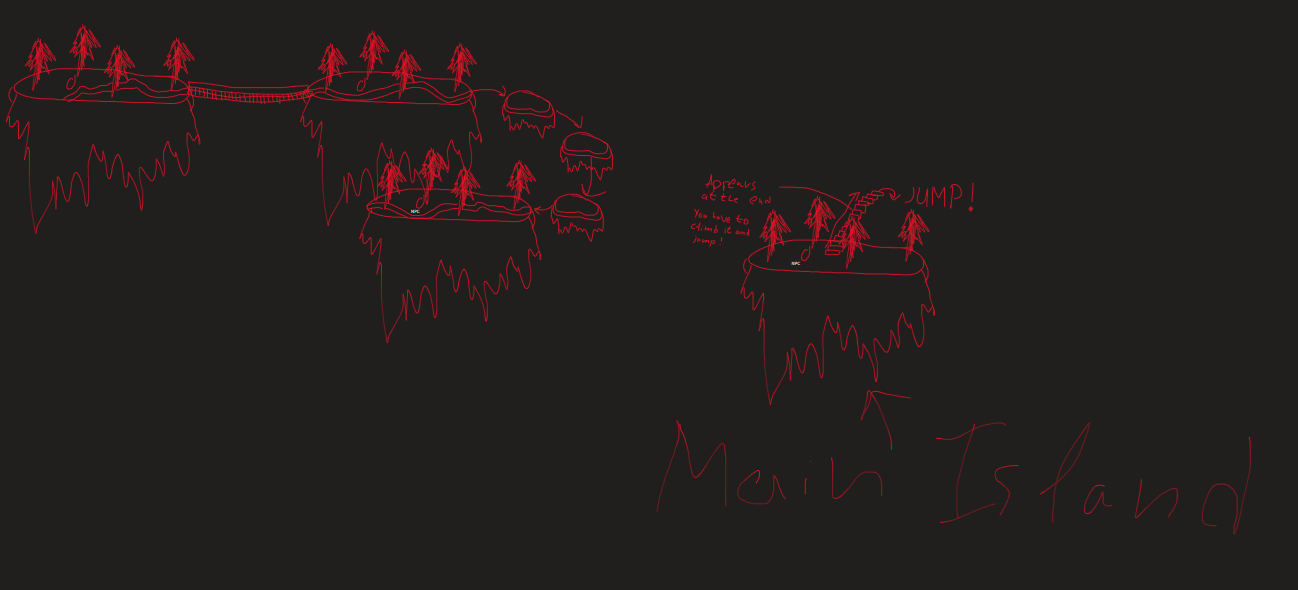
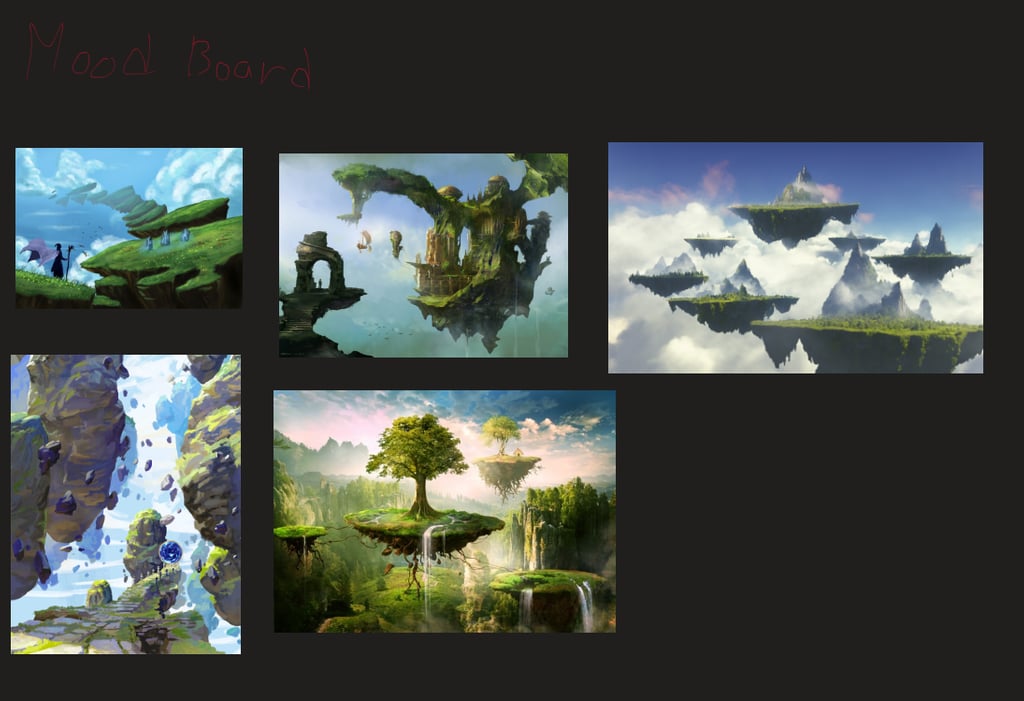
Mood Board and early level flow sketch I did at the beginning of the game jam.
The Sleep Cycle Architecture
The game's progression is mapped directly to human sleep cycles, with Sleep Paralysis sequences acting as narrative punctuation marks between the high-speed dream layers.


The Rush
Falling asleep. Introduction to basic movement.
Unlocks: Jump, Sprint, Crouch, and Wall Run
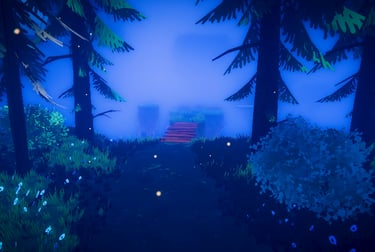
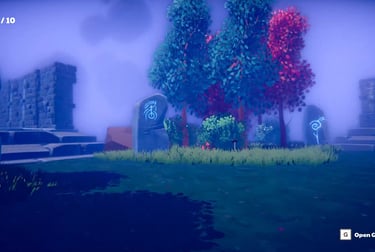
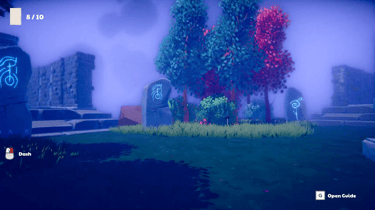
Distant Past
Navigating early memories.
Unlocks: Dash
Self-Doubt
Facing internal friction.
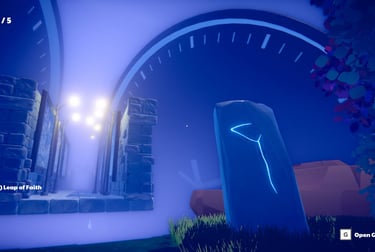
Unlocks: Leap of Faith
Overthinking
Mental clutter.
Unlocks: Focus
4
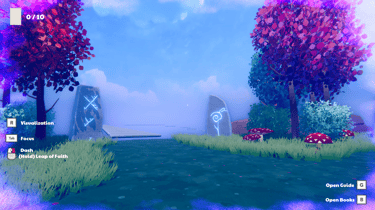
Fear of Transformation
Embracing the unknown.
Unlocks: Visualization
Hidden Potential
Climax of complexity.
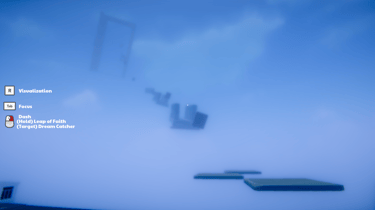
Unlocks: Dream Catcher
The Return
Closing the loop, waking up.
3
2
1
5
6
7
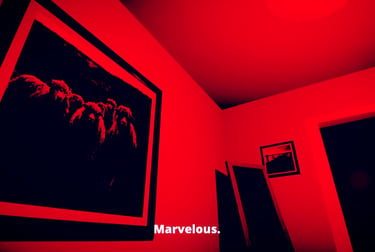
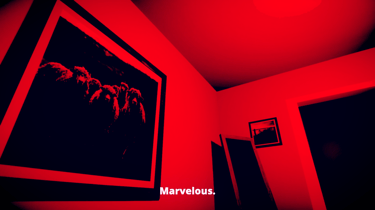
Between each Deep Sleep level, the player enters a Sleep Paralysis stage: a moment of stillness where the Sleep Paralysis Demon delivers a monologue and the player sees the completed book with memories of collected pages above their head.
The Sleep Paralysis
Moment of stillness delivering narrative.
Level Design: The Rush
Ki-Shō-Ten-Ketsu stage: Ki - Introduction
Mechanics in focus: Jump, Crouch, Sprint, Wall Run
Thematic concept: The rushed morning, a universal, relatable experience, is used to ground the surreal world.
The Rush opens the game. Its design serves two purposes simultaneously: it is the mechanical tutorial and the narrative introduction.
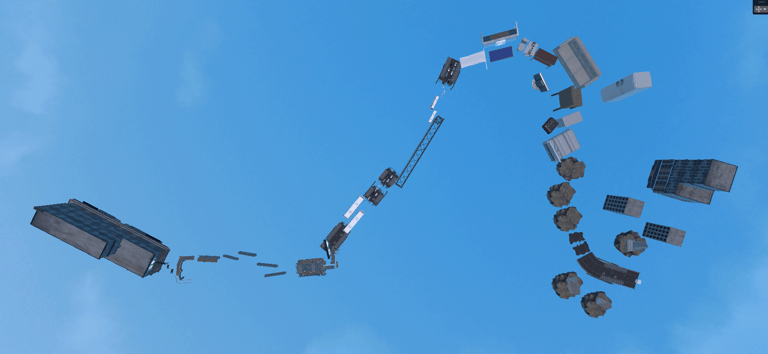
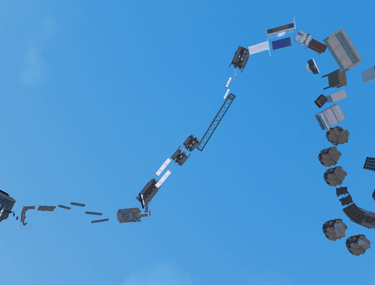
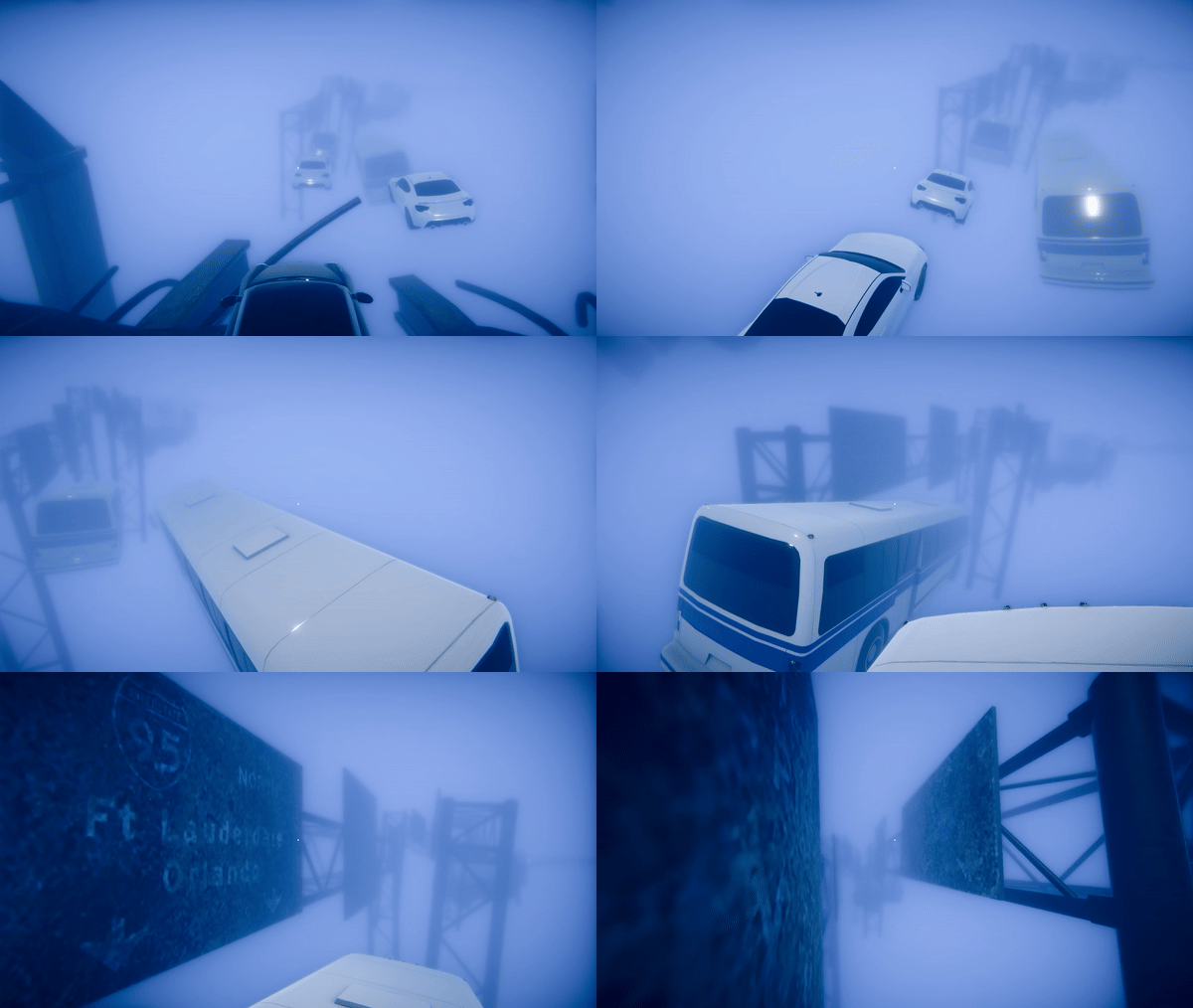
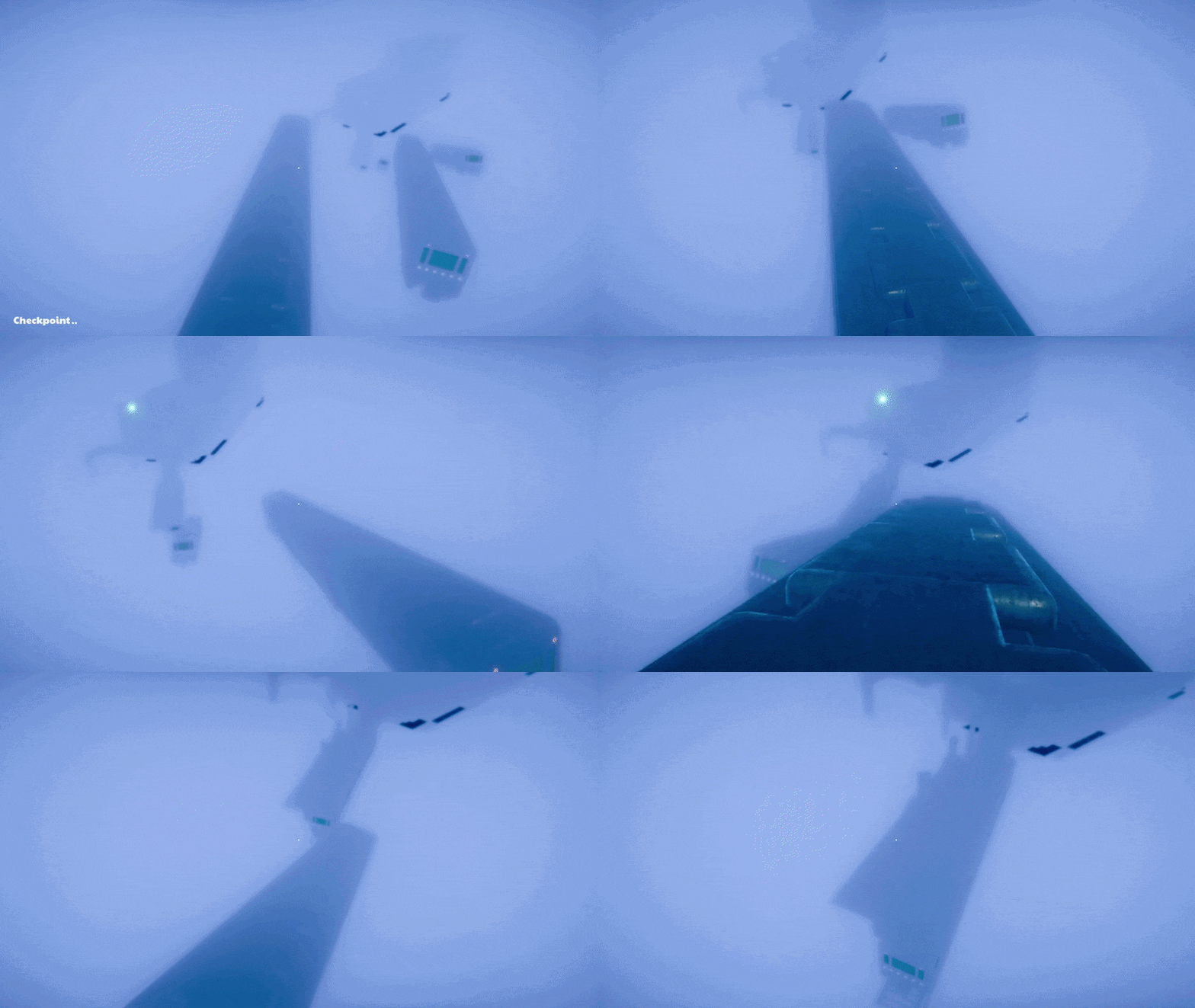
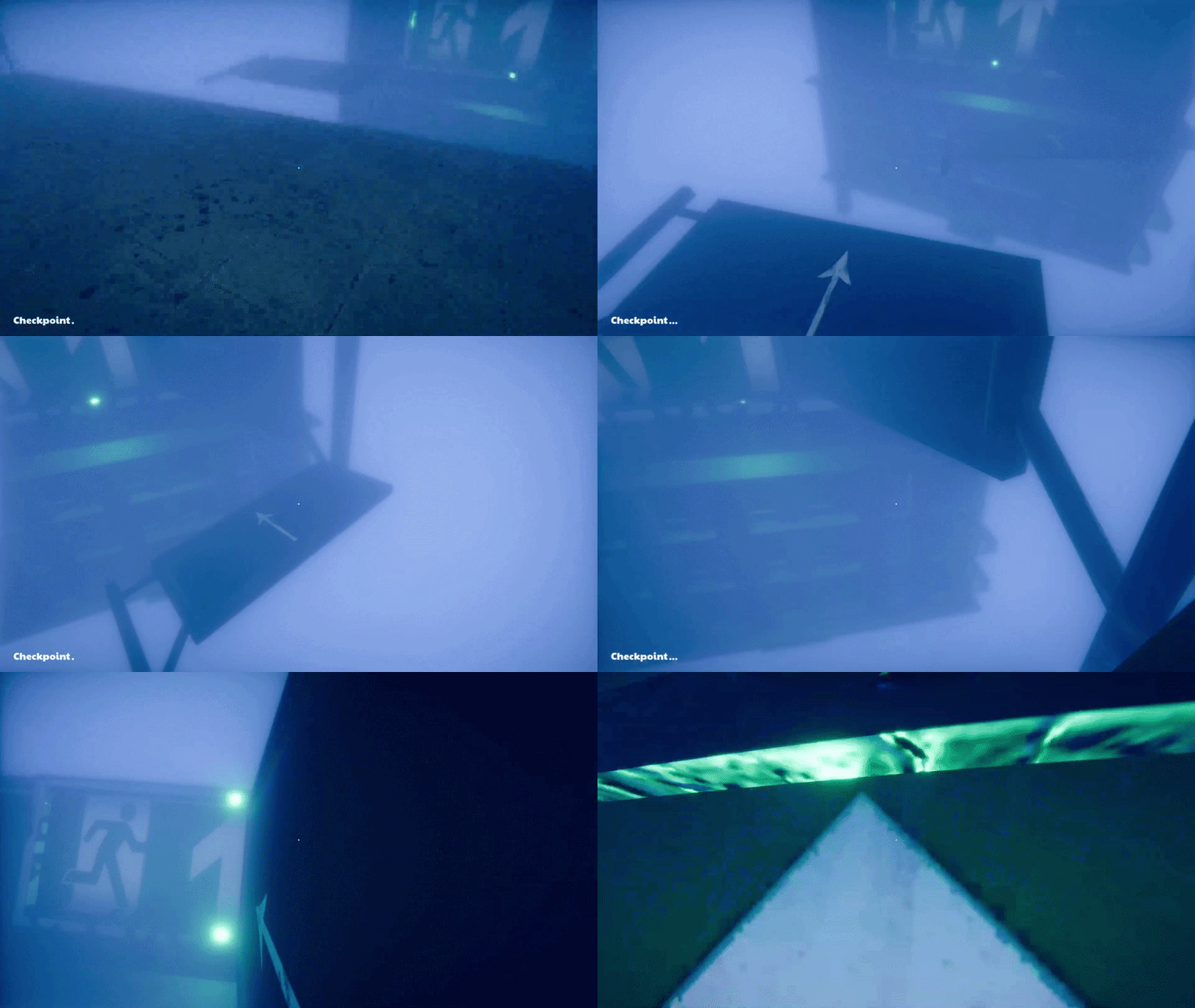
The player begins in their bedroom. A crack in the wall reveals the surreal environment outside — the first visual signal that this world operates by different rules. From that moment, the level unfolds as a sequence of familiar spaces made strange: bedroom to floating living room furniture, through a bathroom setting, past a rush-hour highway, into a subway station, and finally arriving at an elevator. The sequence is designed to feel like a distorted memory of a morning commute, recognisable enough to connect, strange enough to disorient.
Each environment segment introduces one of the four base mechanics in context. The player isn't instructed to sprint; the geometry makes it the natural choice. They aren't told to wall run; the surfaces invite it. The level teaches by constructing situations, not by displaying prompts.
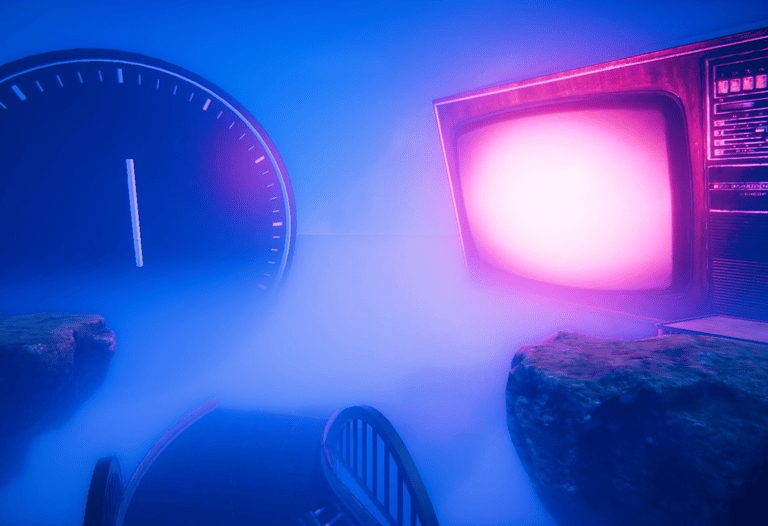

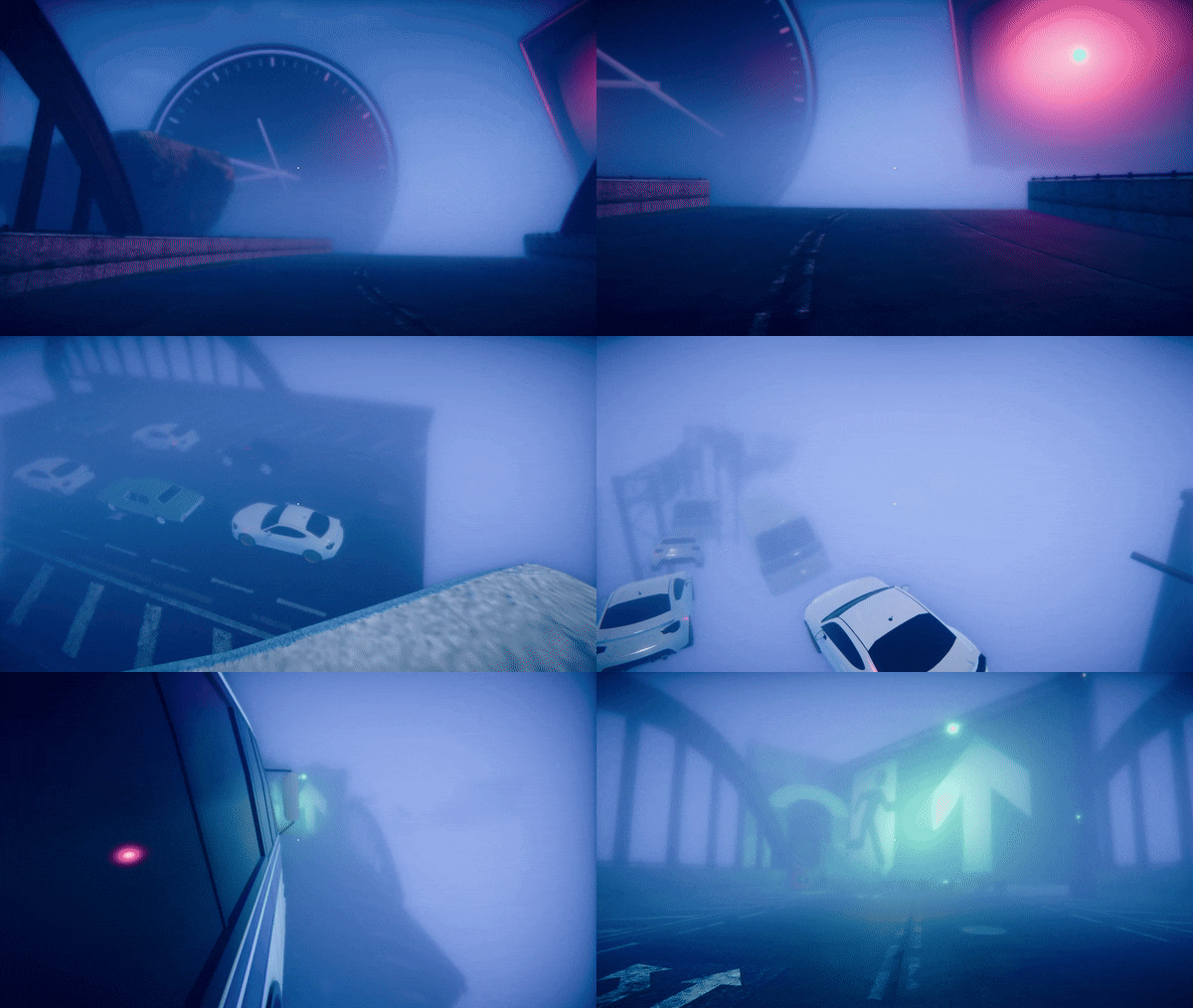
All design work by Tihomir Tilev, from initial concept to implementation in engine
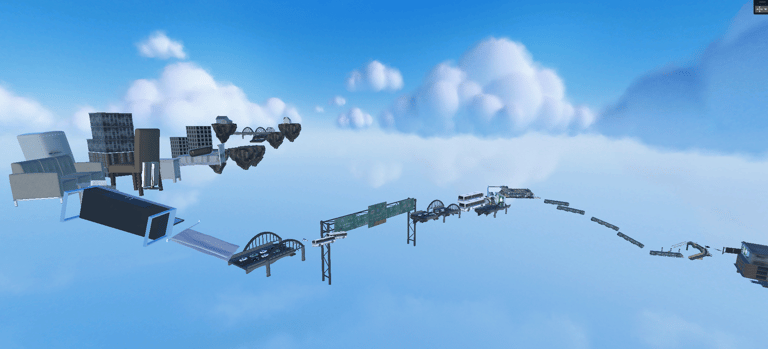
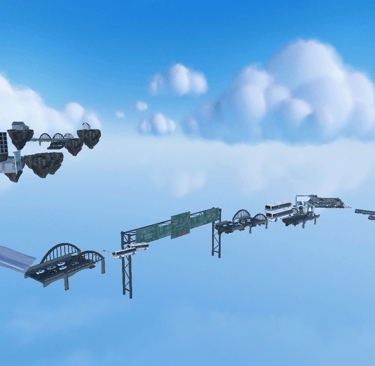
Level layout without the fog.
Level Design: Self-Doubt
Ki-Shō-Ten-Ketsu stage: Shō - Development
Mechanics in focus: Jump, Crouch, Sprint, Wall Run, Dash
Thematic concept: The first honest look inward, uncertain but not overwhelming, reflective without yet being confrontational
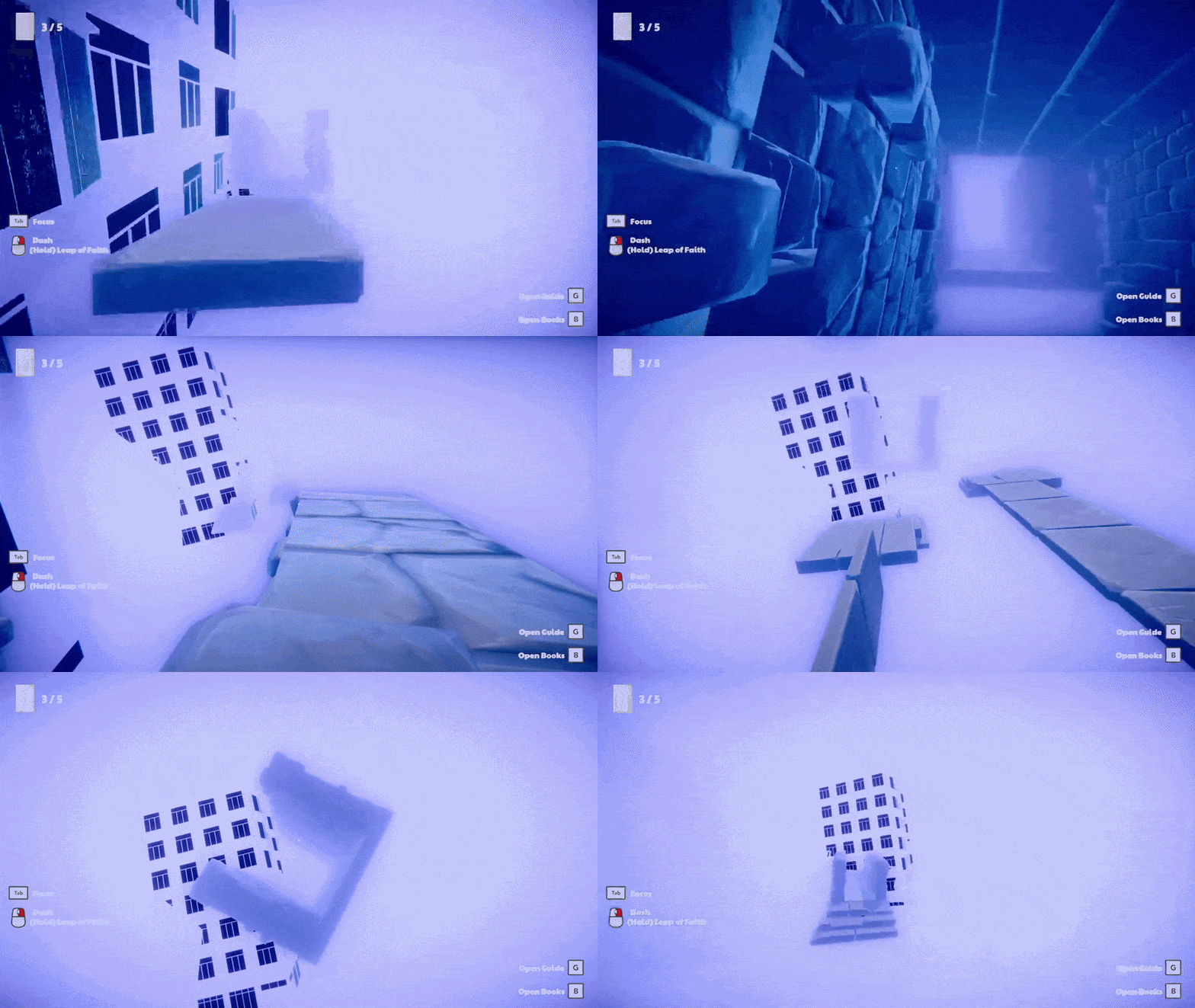
Self-Doubt is the first full layer of the game, and the first designed to ask the player to hold everything at once. All four base mechanics plus Dash are integrated rather than sequenced. There is no section dedicated to Wall Run and another to Dash. The geometry makes chaining them the path of least resistance. This is the Shō principle in practice: the point at which a mechanic stops feeling like a mechanic and starts feeling like an integral part of the design.
Thematically, the level earns its name. The geometry is open, the pacing contemplative, and the challenge is about reading space rather than reacting to it. Room to breathe, and in doing so, room to second-guess yourself.
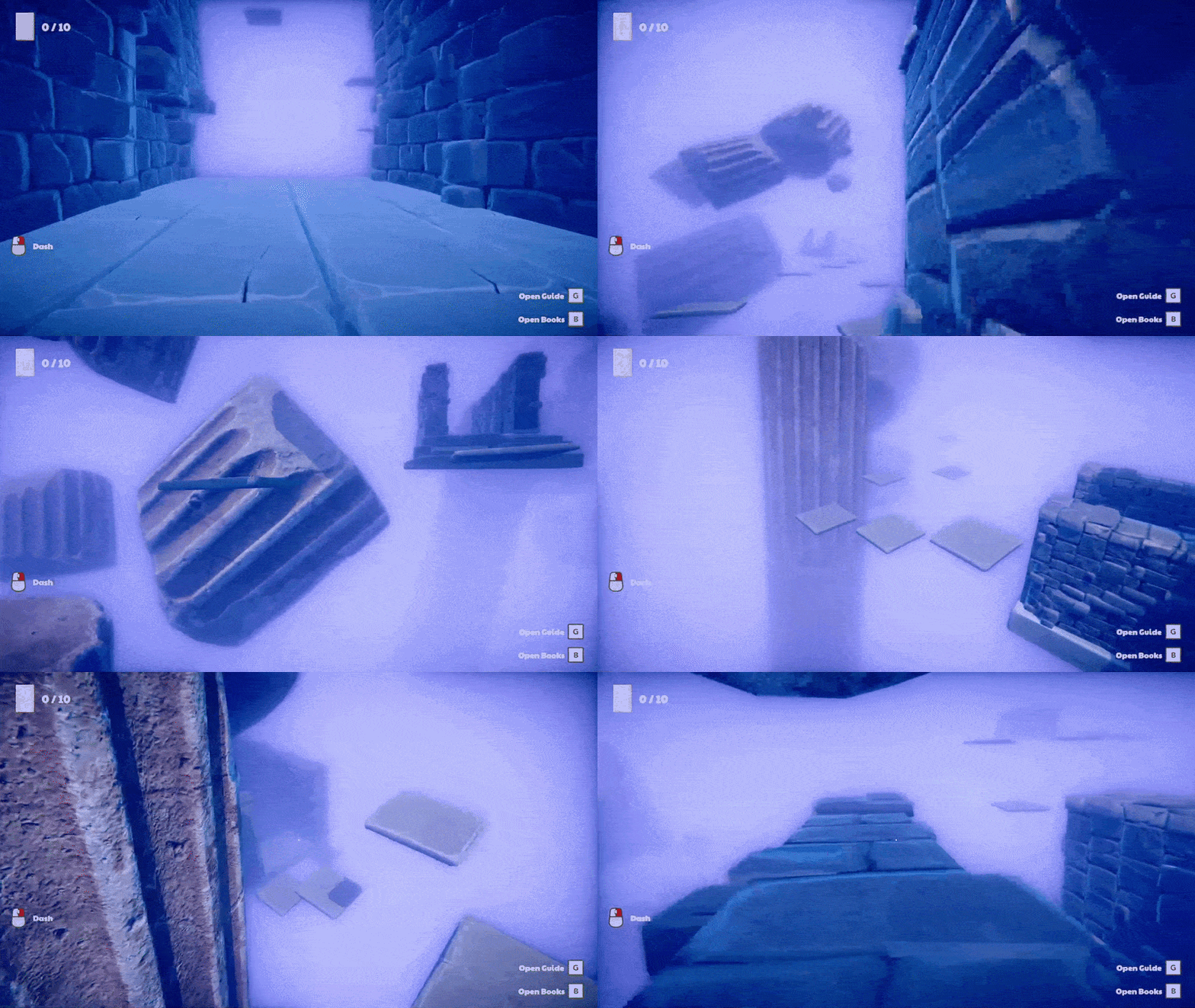
An open level with no predetermined path
Self-Doubt is the only fully non-linear level in the game. The player starts at a central hub island and collects 10 pages across 10 surrounding floating islands in any order they choose. The structure mirrors the theme: self-doubt rarely has a clear direction; it circles and revisits. A linear level would have contradicted that.
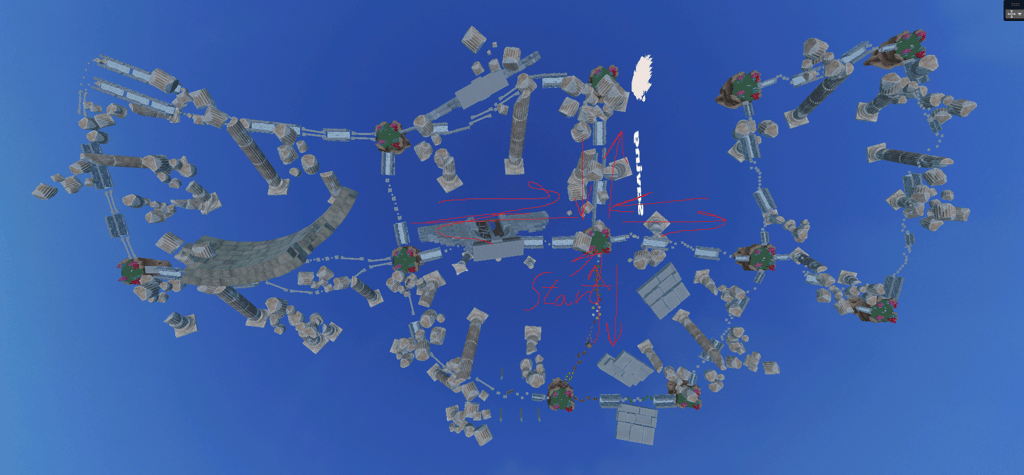
All design work by Tihomir Tilev, from initial concept to implementation in engine
Level layout without the fog.
The bidirectional design challenge
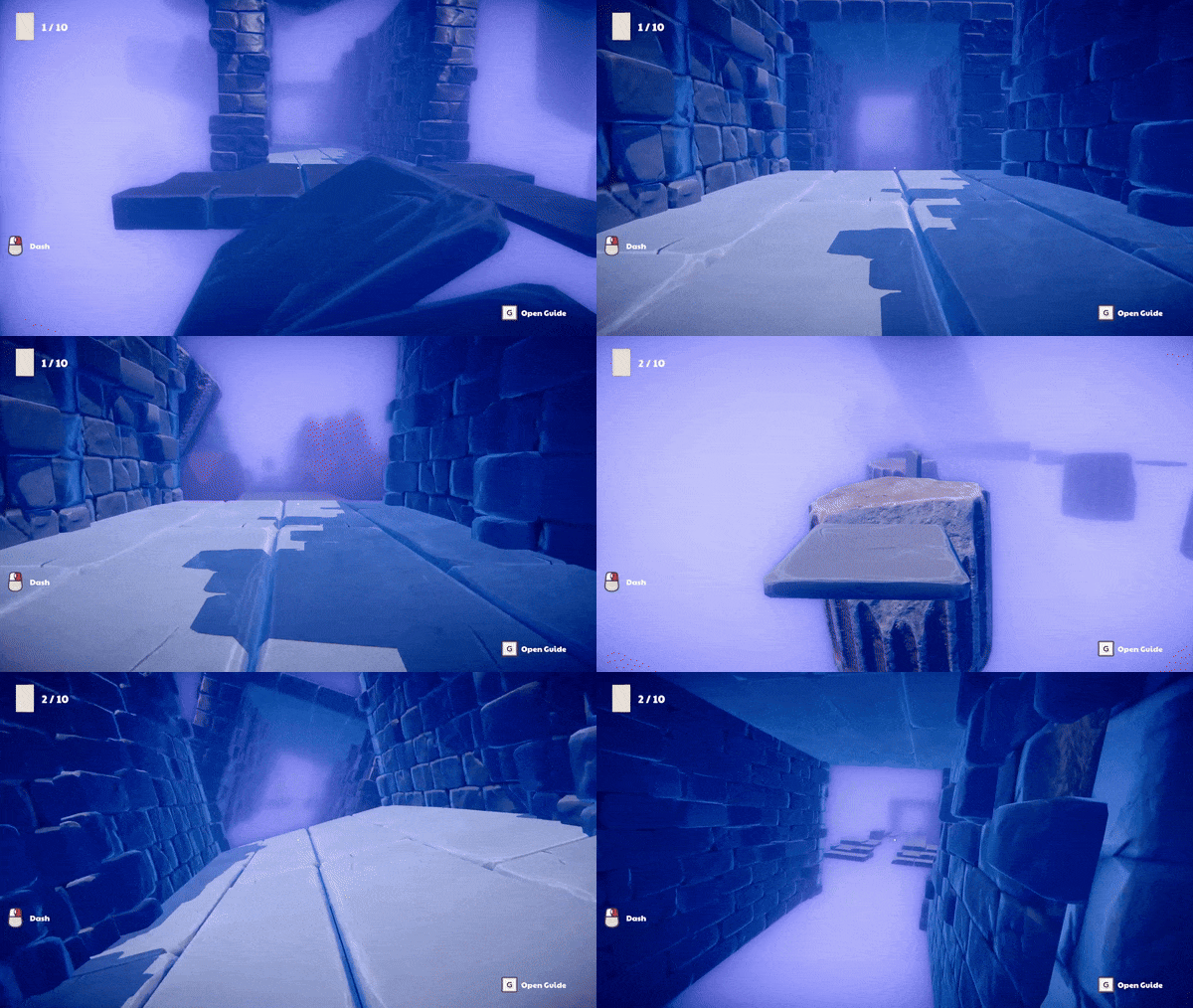
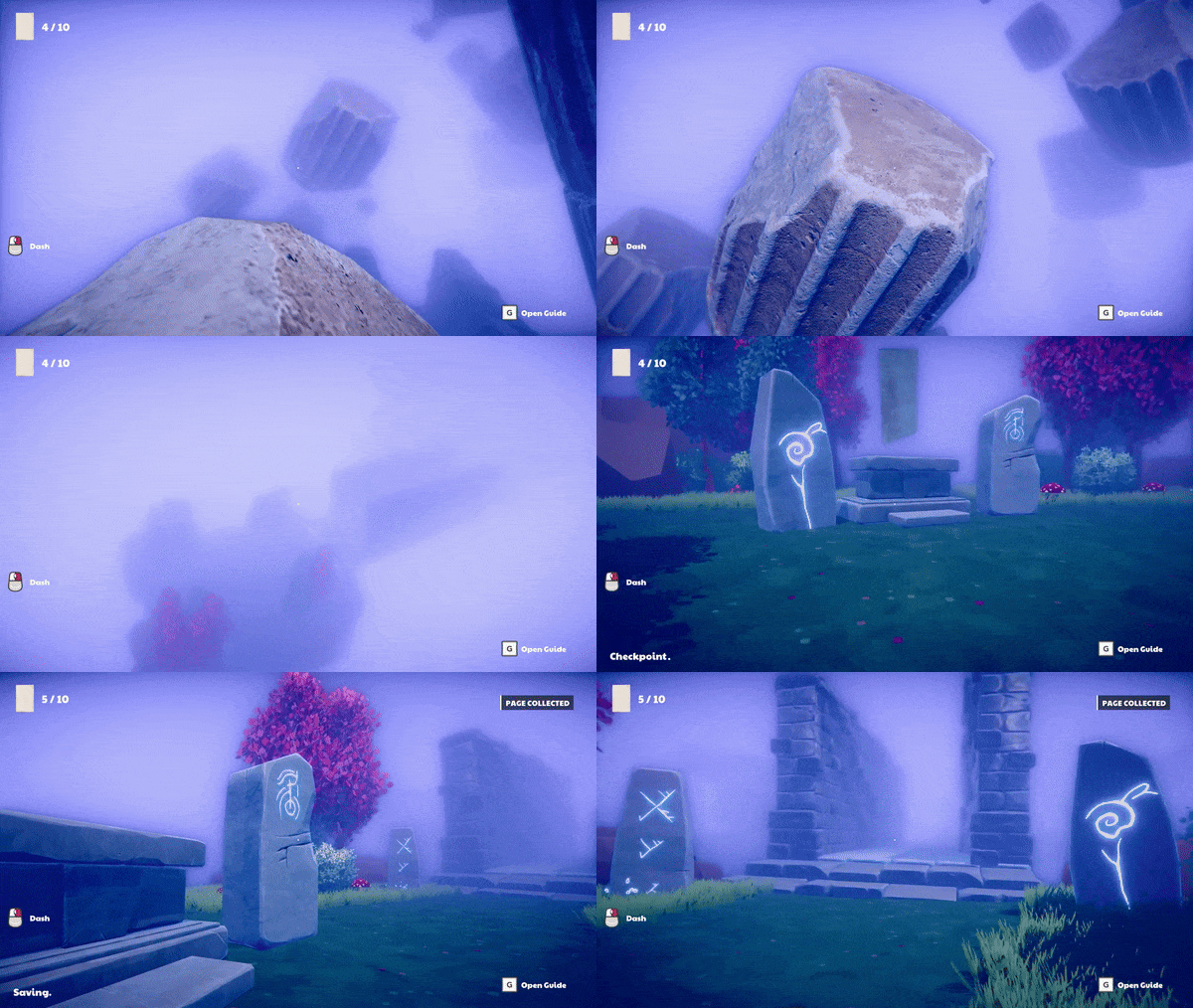
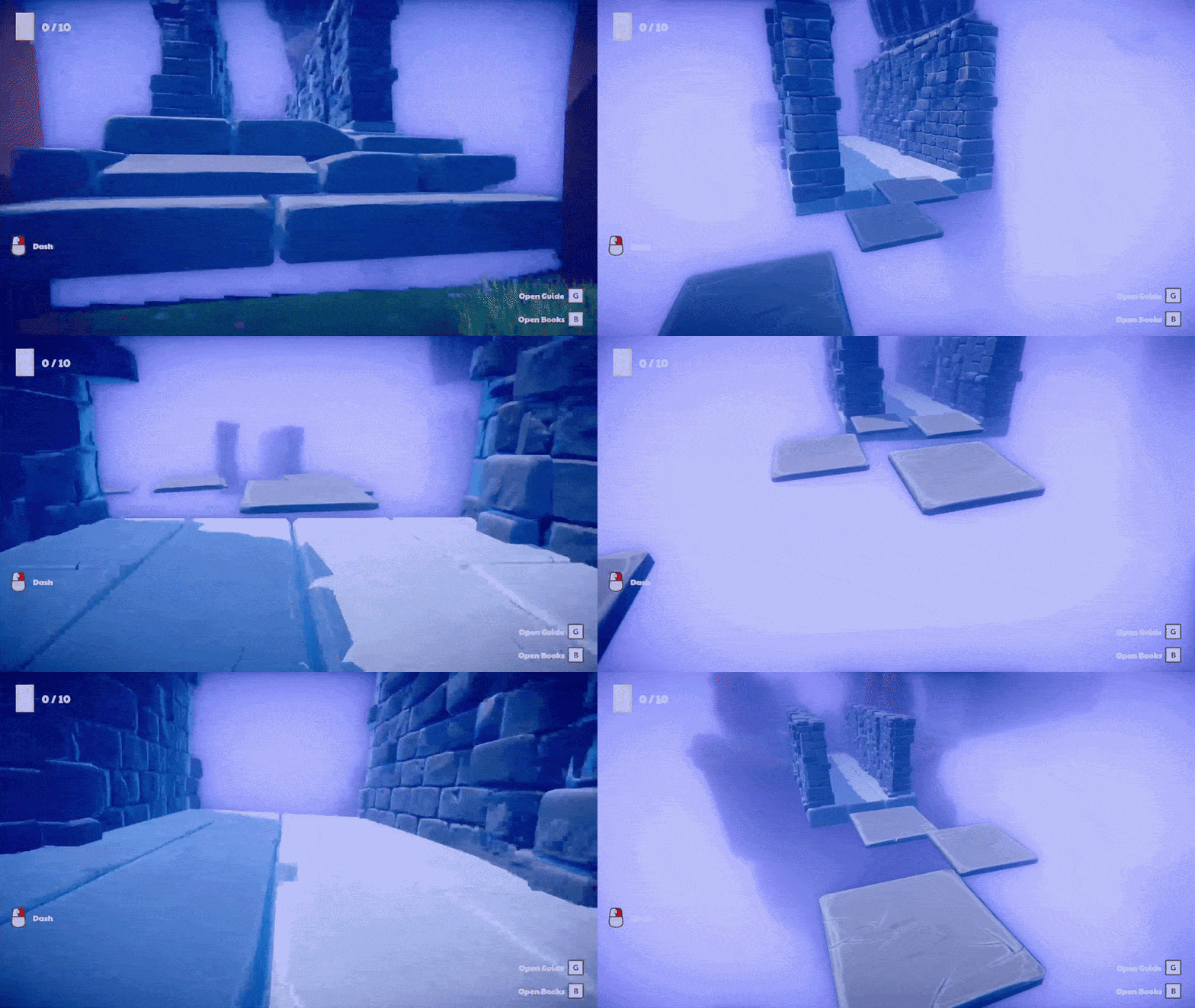
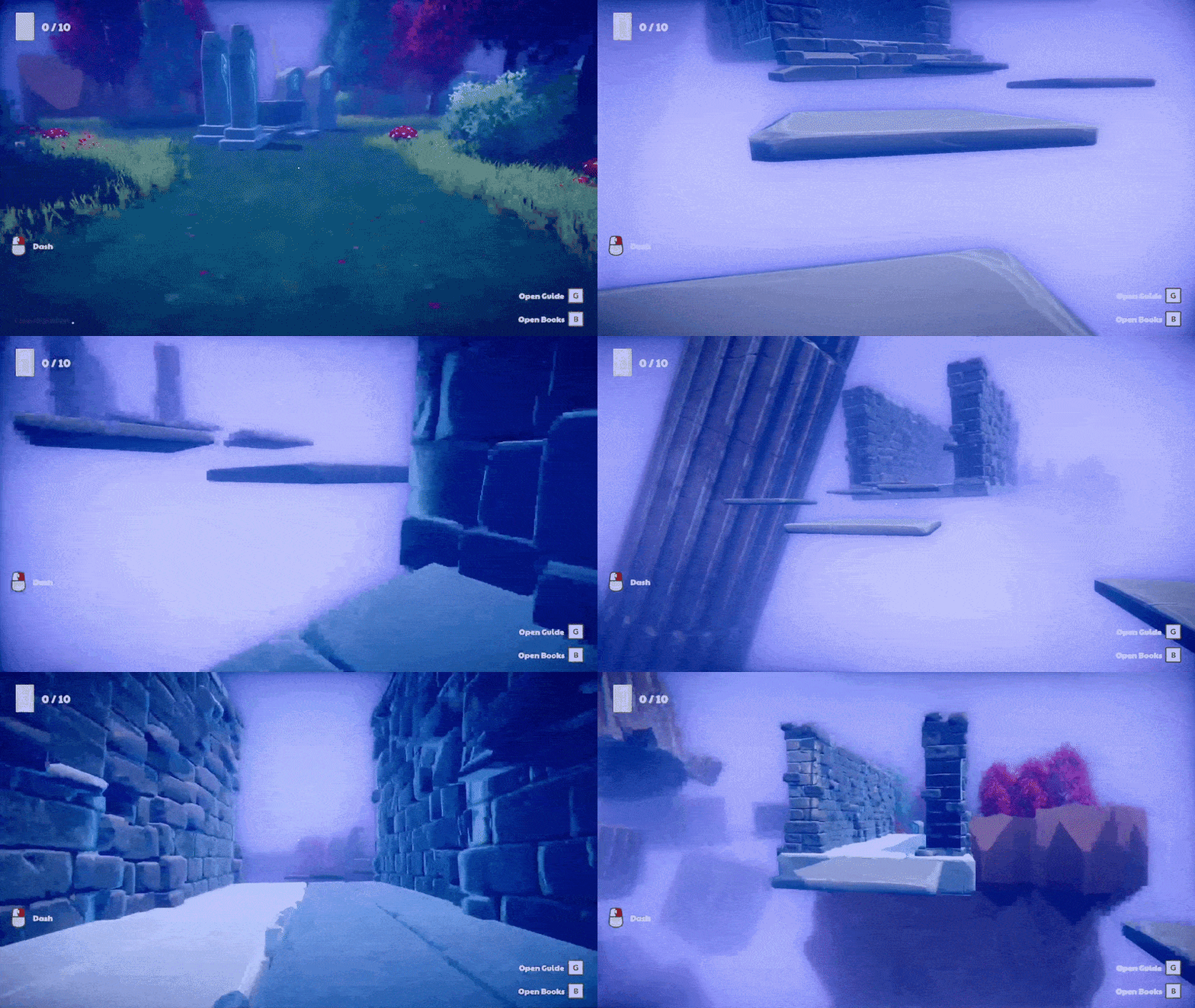
Every path between islands had to be interesting in both directions, because depending on the player's chosen order, any route might be traversed forward or in reverse. Every gap, platform angle, and wall run surface was evaluated from both ends. Designing for bidirectionality doubles the work of every segment and produces a level that feels meaningfully different each time it's played in a new order.
Same path traversed in both directions.
Design Pillars
Play First
Movement as the only language
By removing combat entirely, every design decision had to justify itself through traversal alone, producing a tighter, more intentional game than any feature list could.
Form Follows Function
Every mechanic earns its place
Each of the eight traversal mechanics exists to serve a specific purpose - gameplay, emotional, or thematic. Nothing was added for variety. Everything was added for a reason.
起承転結 Ki-Shō-Ten-Ketsu
Structure at every scale
A four-act East Asian narrative framework applied to the full game arc, governing how mechanics are introduced, developed, twisted, and resolved.
Layered Skill Expression
One level, multiple readings
Every level is completable by a novice and expressive for an expert, not through separate difficulty modes, but through geometry that rewards different levels of spatial awareness and mechanical fluency.
Play First
The game started with a constraint, not a feature list.
By removing shooting, the default verb of the FPS genre, I was forced to ask: what else can this genre do? The answer was movement. Everything in Skyward Dream's design flows from the decision to make traversal the primary form of expression.
This meant that every mechanic had to justify itself by making movement more compelling, more readable, or more emotionally resonant. Nothing was added for feature count. The question asked of every proposed mechanic was the same: does this make the act of moving through this world better?
Form Follows Function
Each of the eight traversal mechanics in Skyward Dream exists to serve a specific purpose, not just in gameplay, but in the game's thematic and emotional logic.
The traversal kit:
Jump - The foundational verb. Multiple jump variations give players expressive control while keeping the primary language of the game legible.
Crouch - Slows the player down and lowers their profile. A deliberate counter-rhythm to the game's momentum.
Sprint - Amplifies momentum and forward drive. Used to heighten the "rush" feeling of early levels. Creates a meaningful trade-off: speed versus control.
Wall Run - Adds a vertical vocabulary to movement. Surfaces that read as scenery to a novice player read as traversal opportunities to an experienced one. Wall Run is the first mechanic that rewards spatial reading over reaction.
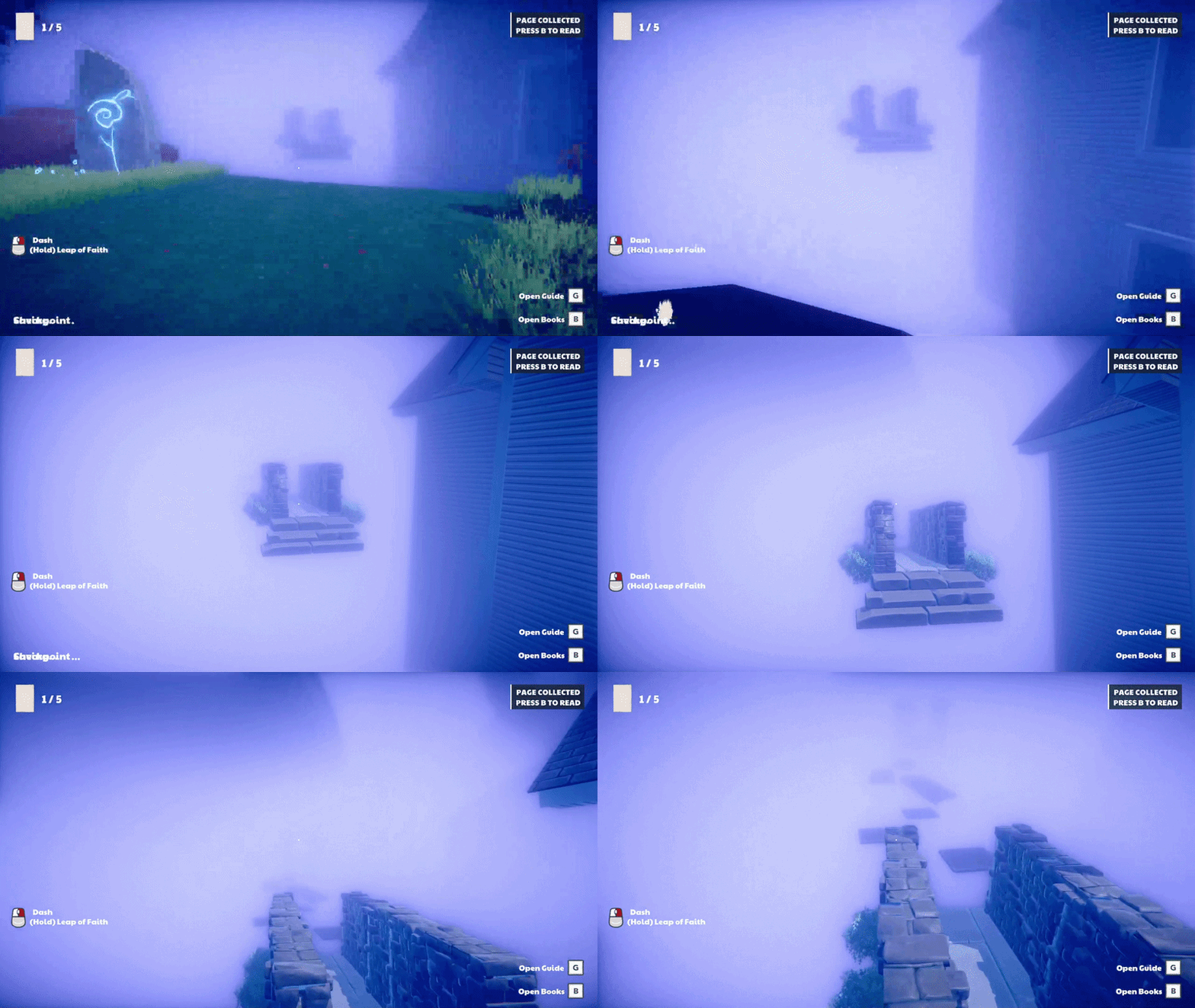
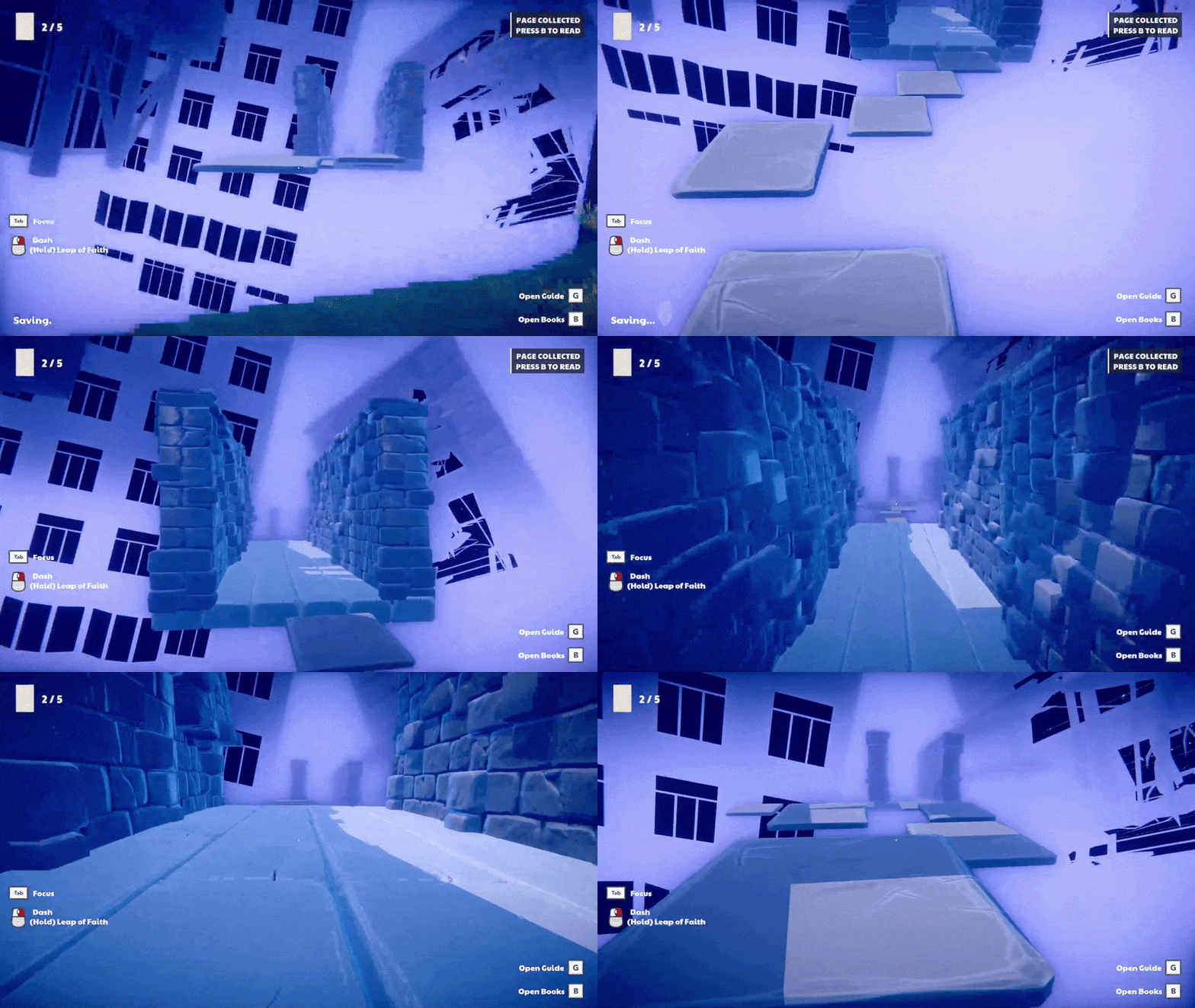
Dash - The first unlocked advanced mechanic. Horizontal burst movement that opens up traversal lines invisible to players who haven't learned to read the geometry for them. The foundational skill-expression tool.
Leap of Faith - A Dash variant that incorporates the camera's vertical angle. Aiming upward and activating it launches the player in a powerful diagonal arc. Rewards spatial planning and commitment; there is no mid-air correction. Its name is intentional.
Focus (Slow Down Time) - Time slows for a set period. A deliberate breath mechanic in a game built around momentum. Teaches players that sometimes the right move is to stop rushing.
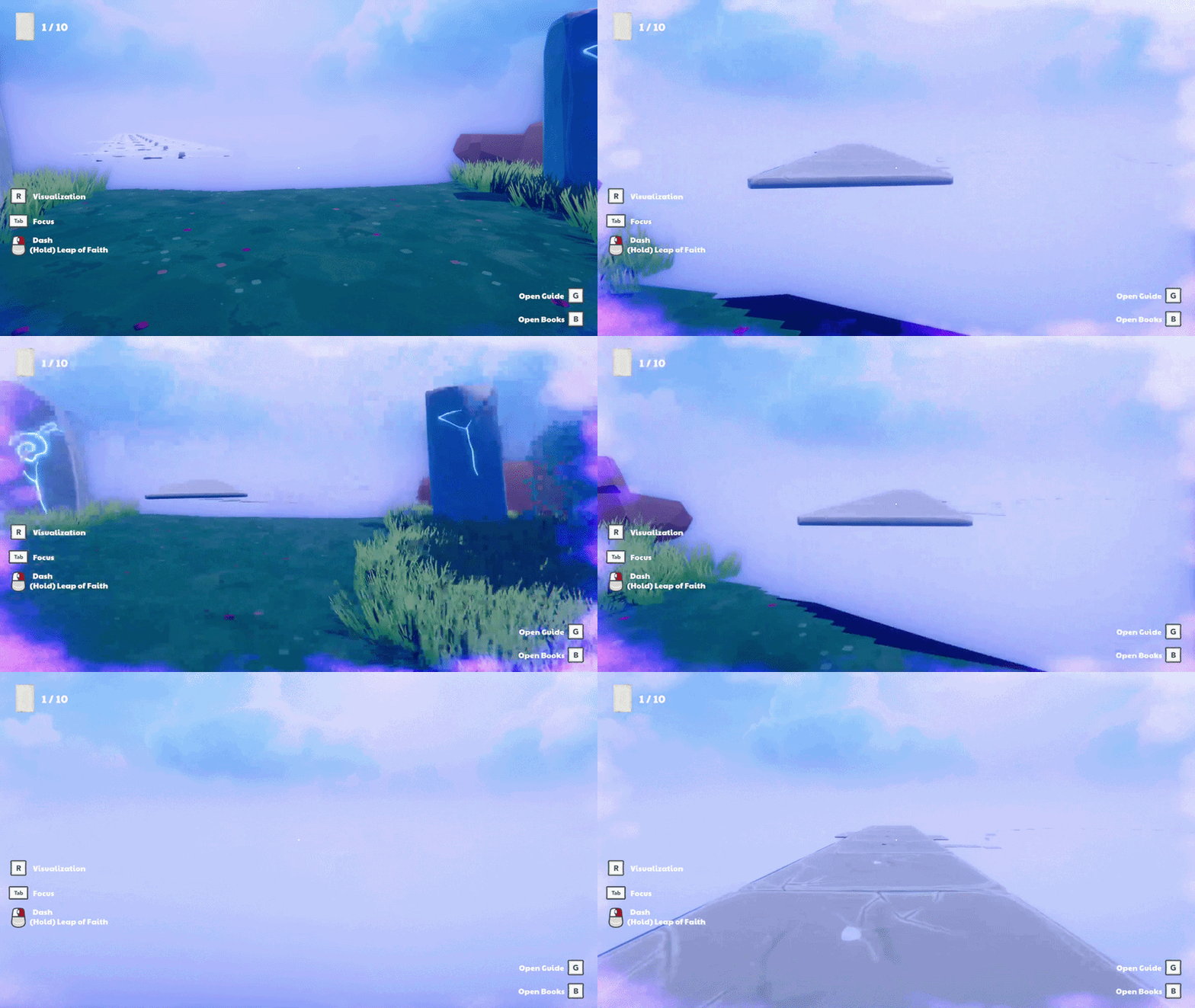
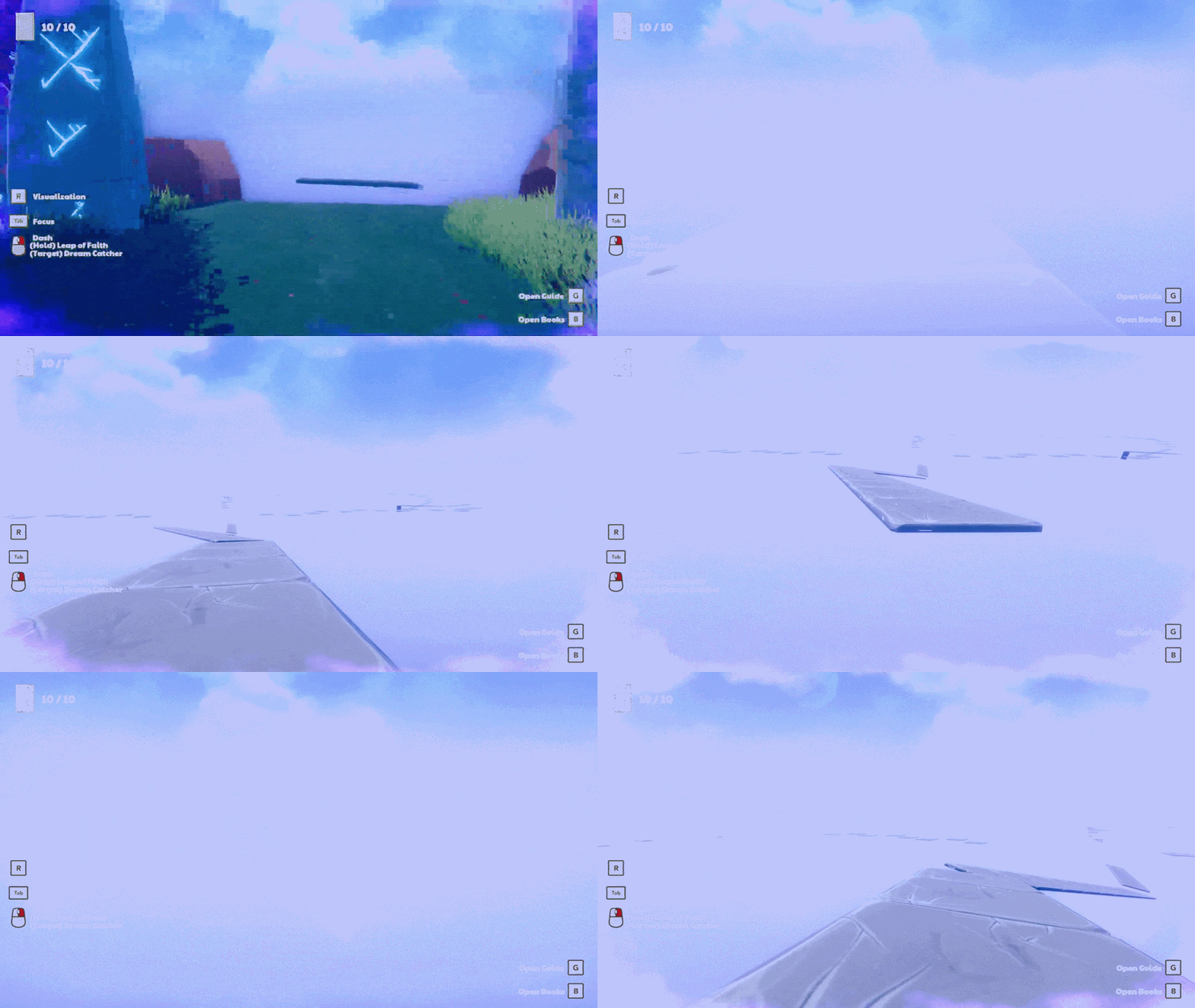
Visualization - Reveals hidden platforms and objects. Not a power fantasy, a readability tool. Rewards observation over reaction, and reframes certain sections entirely when active.
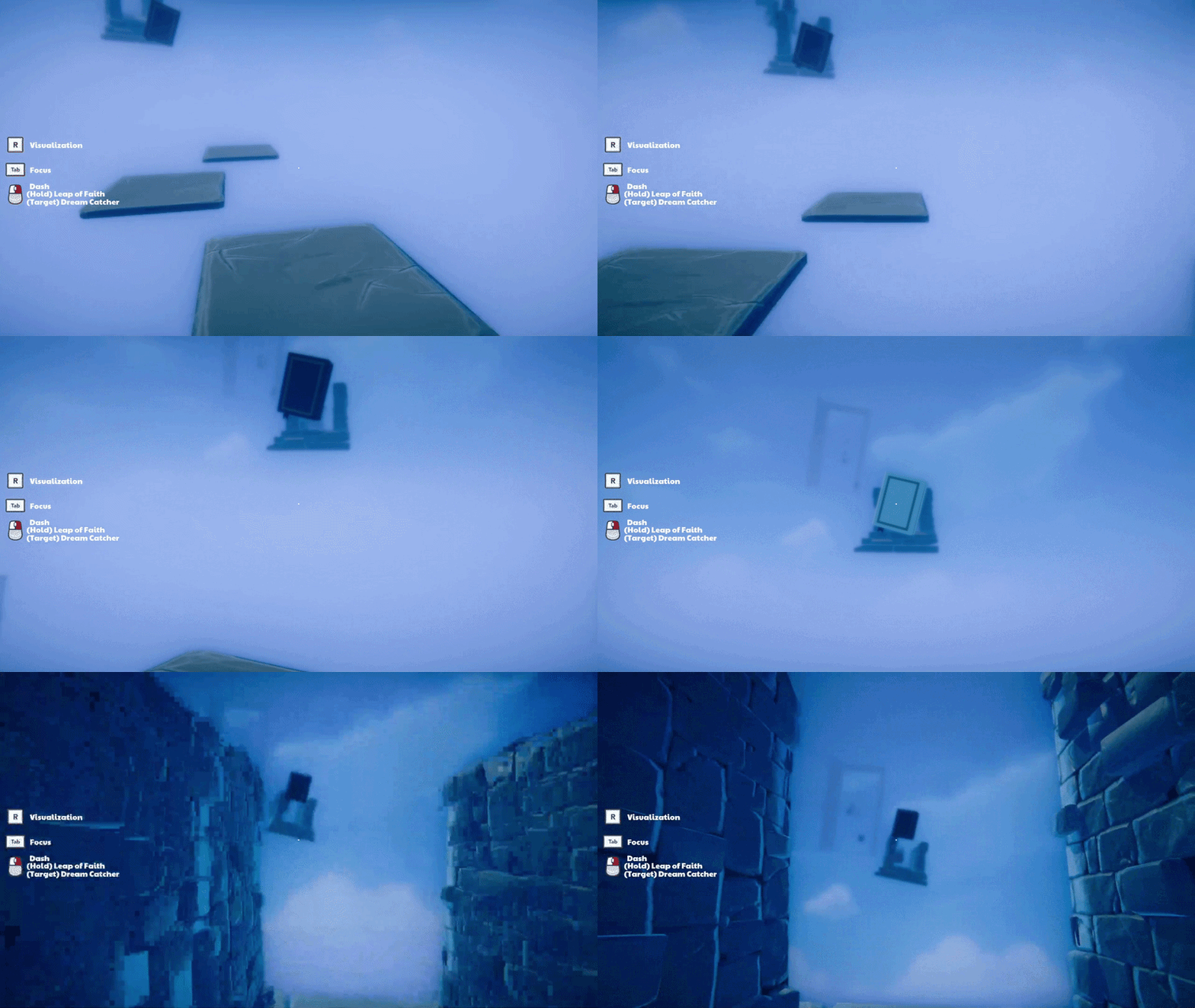
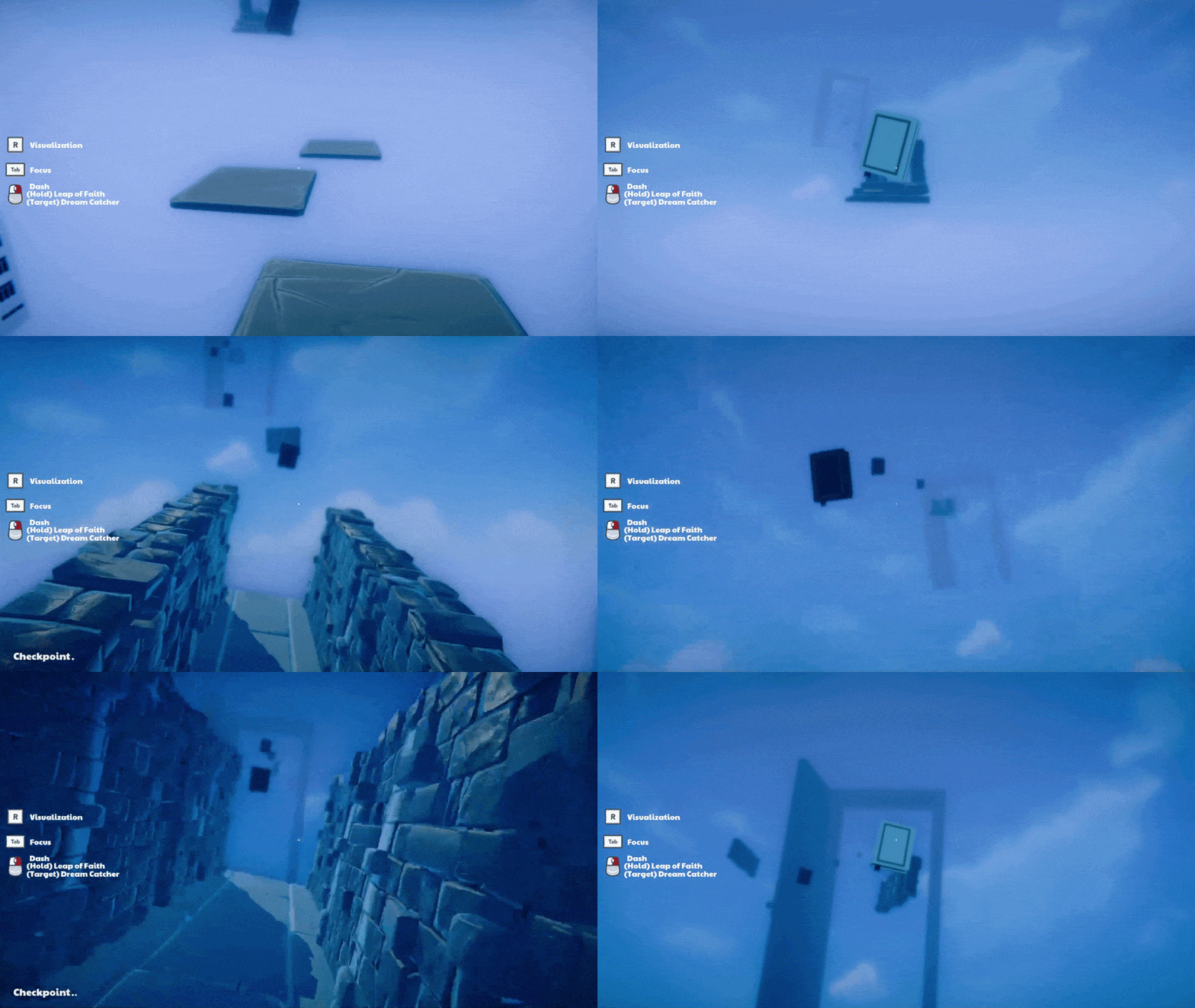
Dream Catcher - The final unlocked mechanic. The player aims at a target and launches toward it with significant force. The only mechanic that introduces aiming into a movement-only game, a deliberate nod to the FPS genre's roots, is used as the narrative resolution of the entire experience.
Ki-Shō-Ten-Ketsu
起承転結 is a four-act East Asian narrative structure. Applied to game design, it provides a framework for introducing, developing, complicating, and resolving ideas, whether those ideas are story beats, level concepts, or individual mechanics.
I used Ki-Shō-Ten-Ketsu at the full game arc and within individual levels. A design principle that produces a game that feels structured and intentional at every level of experience.
起 Ki - Introduction: The Rush
The first level introduces the four base mechanics (Jump, Crouch, Sprint, Wall Run) and establishes the game's thematic world. The player begins at home, familiar, grounded, and immediately encounters the crack between the ordinary and the surreal. The tone is accessible. The difficulty is forgiving. The mechanic introduction is natural, not instructional.
承 Shō - Development: Layers 1 and 2 (Distant Past, Self-Doubt, Overthinking, Fear of Transformation)
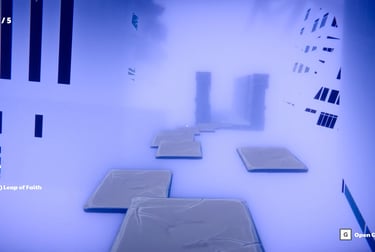
The middle section of the game develops and evolves both the traversal kit and the player's skill with it. Each level introduces a new advanced mechanic that builds on the foundation. The thematic content deepens. Self-Doubt is chill but reflective; Overthinking is cluttered and chaotic, and the levels grow more demanding as the player's confidence grows.
転 Ten - Twist: Hidden Potential
The game's pace shifts dramatically. The majority of this level is hidden without the use of the Visualization mechanic. A player who charges forward, as they've been rewarded for doing across previous levels, will find the level nearly un-navigable. Platforms that should be there simply aren't visible. The only path is to stop, activate Visualization, and look at the space differently. The design forces a behaviour that contradicts everything the game has rewarded up to this point: instead of moving fast and reading geometry on the fly, the player must stand still and reveal the world before they can traverse it. Thematically, it works: the level is called Hidden Potential, and potential, by definition, isn't visible until you choose to look for it. This is the Ten, the moment that recontextualises everything before it.
結 Ketsu - Resolution: The Return
The final level brings the player back to The Rush, the first level, the beginning. But everything is different. A path that was not visible before is now accessible, and completing it requires the Dream Catcher: a mechanic that demands aiming at a target. The genre's most fundamental skill, the one the game explicitly set aside in the jam, returns as the key to the ending. The circle closes.
Layered Skill Expression
Every level in Skyward Dream is designed to be completable by a novice player and expressive for a skilled one. This is not achieved through separate difficulty modes; it is achieved through layered readings of the same geometry.
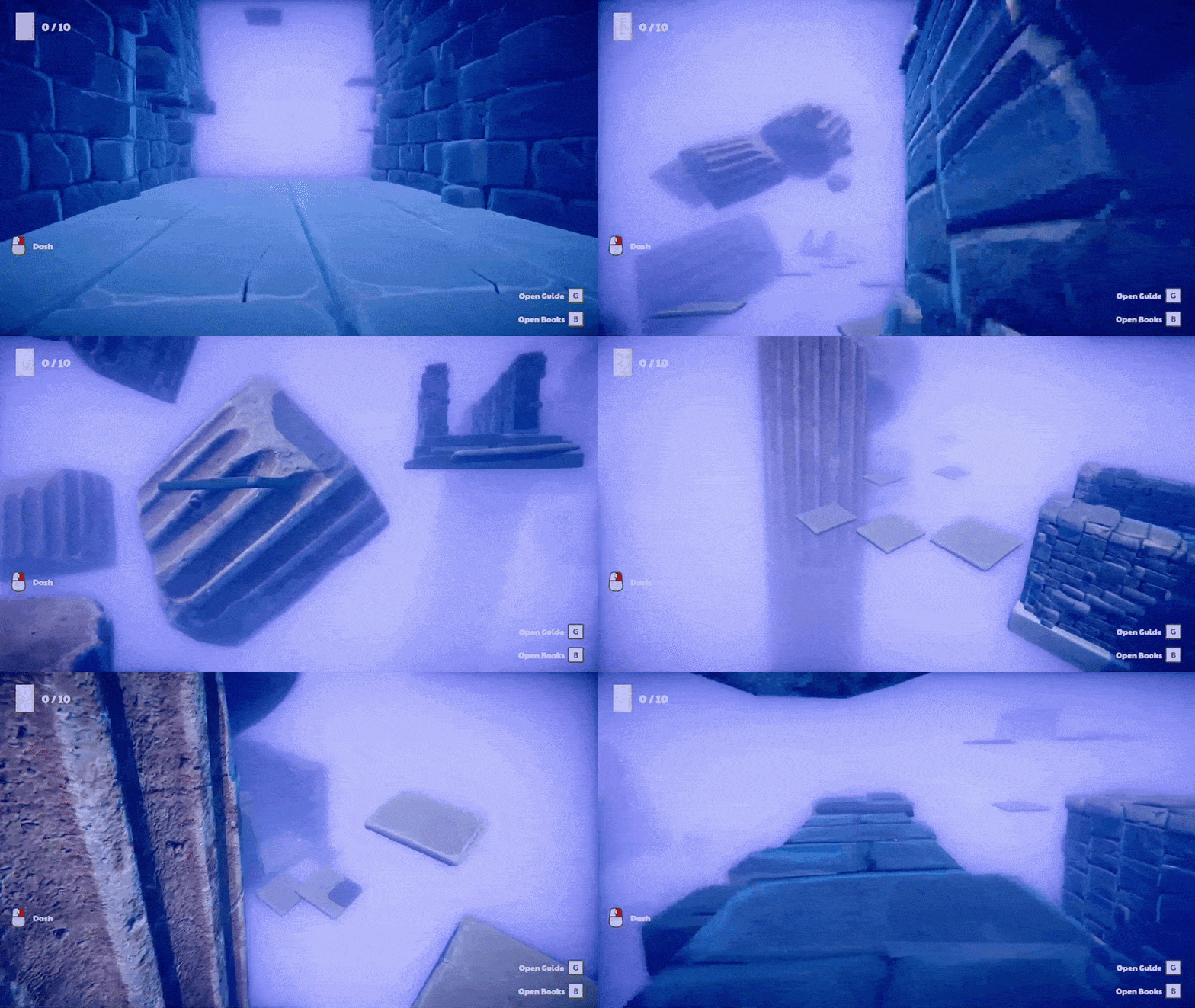
A novice player sees stable platforms, clear spacing, and a direct route. A skilled player sees the same environment but reads it differently: wall surfaces become traversal opportunities, platform arrangements suggest speed routes, and mechanic combinations enable shortcuts that the novice path doesn't require.
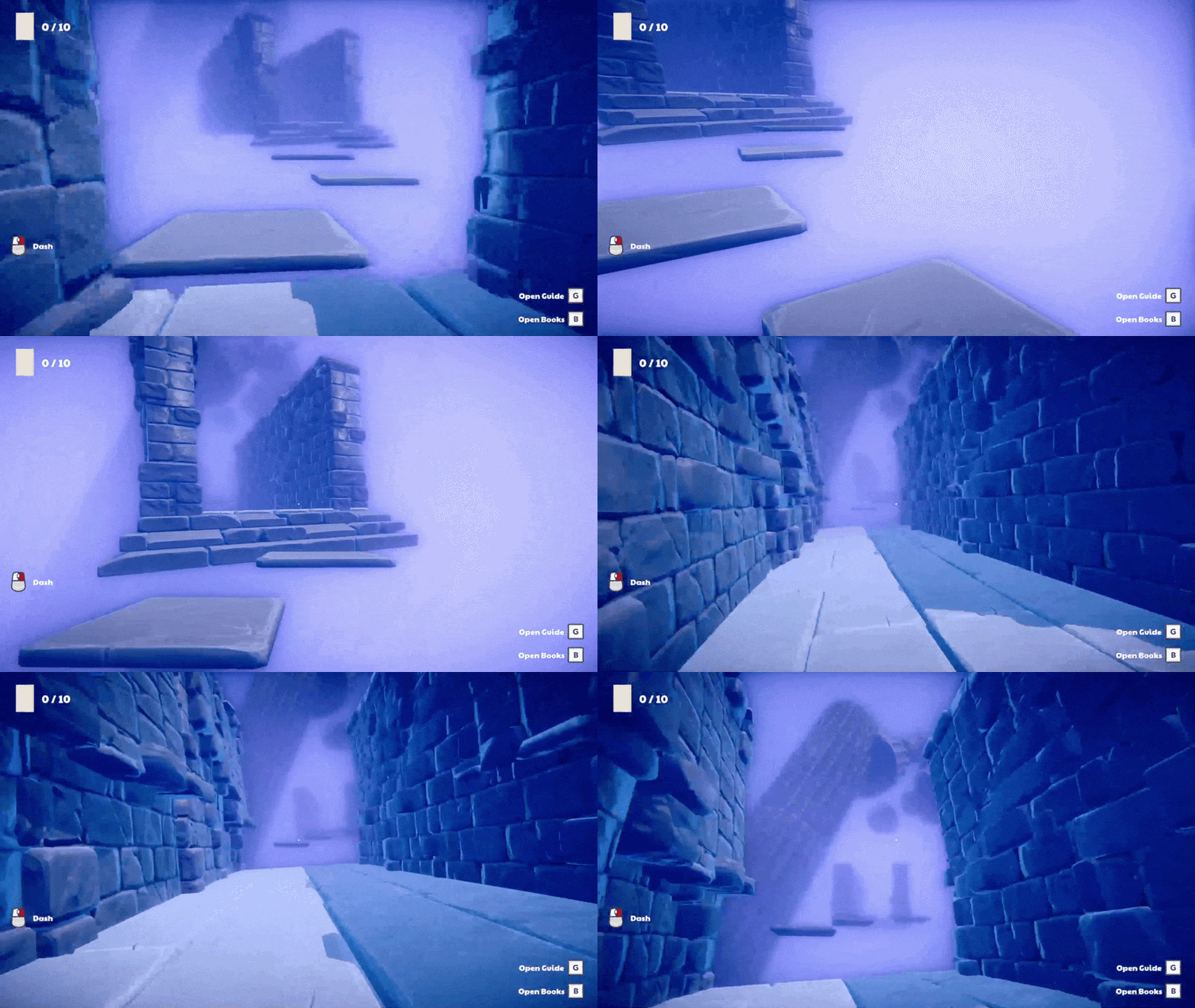
Both paths are designed intentionally. The expert route is not a happy accident; it is placed, scaled, and positioned so that it is visible (but not obvious) from the novice path. If an advanced route is invisible from the main path, it isn't a skill expression opportunity. It's a hidden corridor. The distinction matters.
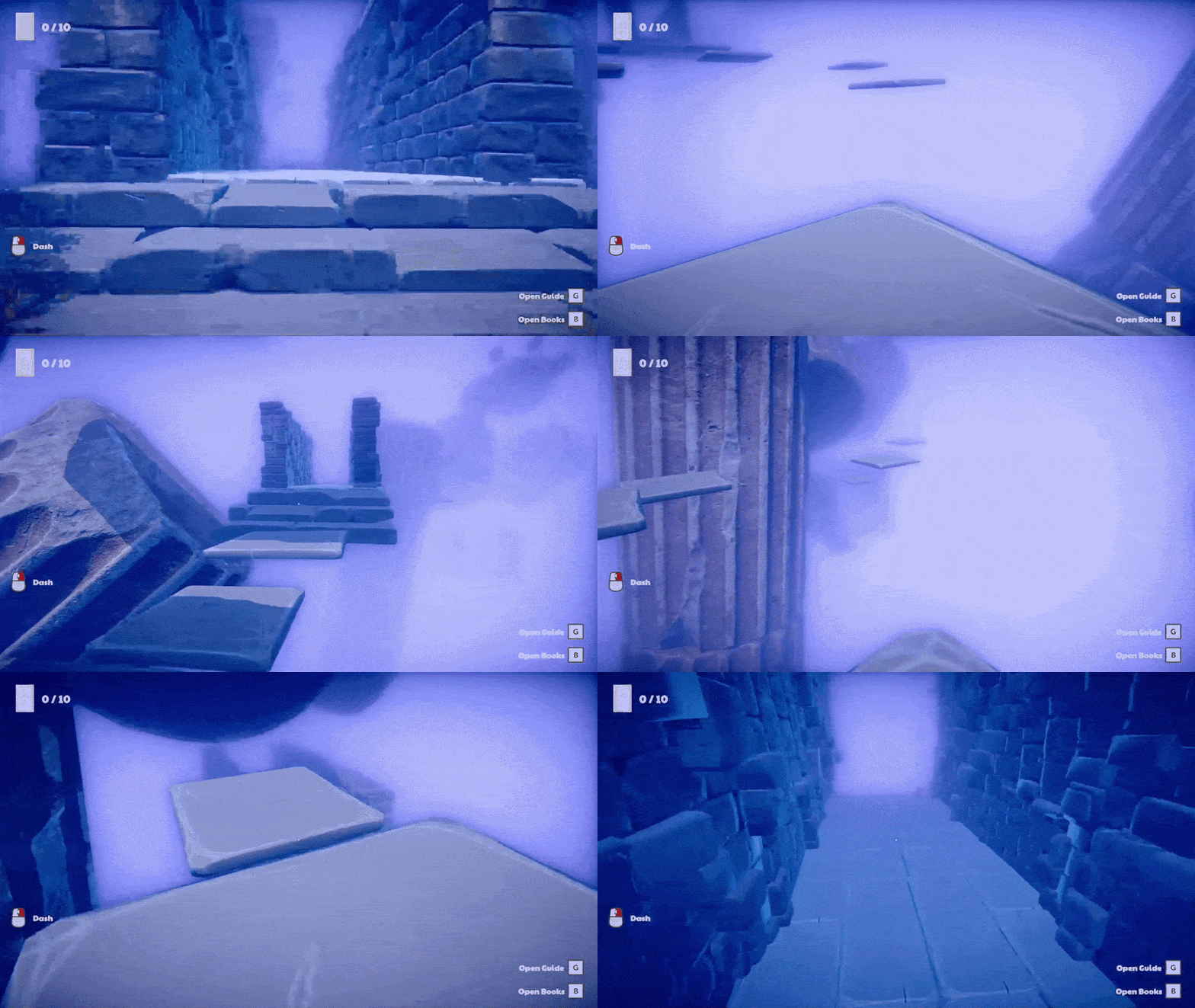
The easier safe route
The difficult, skill-expressive route
METHOD
A systematic approach to world-building
PHASE 1
Theory & Goals
Identifying core gameplay loops and player experience goals before drafting the first spatial layout or narrative beat.
PHASE 2
Spatial Prototype
Creating white-box prototypes to validate flow, jump distances, and line-of-sight before asset production.
PHASE 3
The Technical Build
Translating blockouts into high-fidelity environments using a game engine's advanced tools.
PHASE 4
Lighting & Pacing
Utilizing environmental lighting and shadow to guide the player's eye and control the emotional pacing of each scene.
PHASE 5
Release & Analysis
Iterative refinement based on player telemetry to optimize user experience.
1000+
Steam Wishlists
76%
Steam Positive Reviews
Sep '24
Released on Steam
Outcome
Shipping a commercial solo title is not only a technical achievement. It is proof of ownership: the ability to hold a design direction under pressure, make decisions without a team to defer to, and see a full production cycle through from a game jam prototype to a published product.
Every design decision documented on this page was made, tested, iterated, and lived with by a single person. That is the context in which this work should be read.